Buy unblocksource.eu ?
We are moving the project
unblocksource.eu .
Are you interested in purchasing the domain
unblocksource.eu ?
domain@kv-gmbh.de · 0541-91531010
Buy unblocksource.eu ?
How do you transform an object clause or a subject clause into a dependent clause (subordinate clause)?
To transform an object clause or a subject clause into a dependent clause, you can add a subordinating conjunction at the beginning of the clause. For example, changing "I know that he is coming" (object clause) to "I know when he is coming" (dependent clause). Another way is to remove the subject or object pronoun and change the verb form to make it dependent on the main clause. For instance, changing "She believes she can win" (subject clause) to "She believes she can win" (dependent clause). **
Is an infinitive clause a subordinate clause?
Yes, an infinitive clause is a type of subordinate clause. It functions as a single unit within a sentence and is dependent on the main clause for its meaning. Infinitive clauses typically begin with the word "to" followed by a verb, and they can serve various purposes such as expressing purpose, result, or obligation. **


Similar search terms for Clause
Top-Angebote
Products related to Clause:
-
Daily Deals Depot Santa Clause Peeker Yard Ornament, Christmas Fence Decoration, Indoor Outdoor Holiday Placard, DIY Festival Gift redBring the festive spirit to life with this Christmas Fence Ornament Santa Clause Peeker Yard Decoration, the perfect way to surprise neighbors and delight guests this holiday season. Designed for indoor and outdoor use, this charming Santa Clause...21,97 $*Shipping: 0,00 $Secure redirect to the provider
-
DrayTek Vigor 2927 Wired Dual-WAN VPN Firewall RouterEnterprise-class desktop router with integrated 6-port Gigabit Ethernet switch and dual WAN ports. Supports up to 50 concurrent VPN tunnels and 25 SSL VPN tunnels with 60,000 NAT sessions capacity. Advanced routing protocols include BGP, static IPv4/IPv6, and policy-based routing with comprehensive remote management options.283,49 £*Shipping: 0,00 £Secure redirect to the provider
-
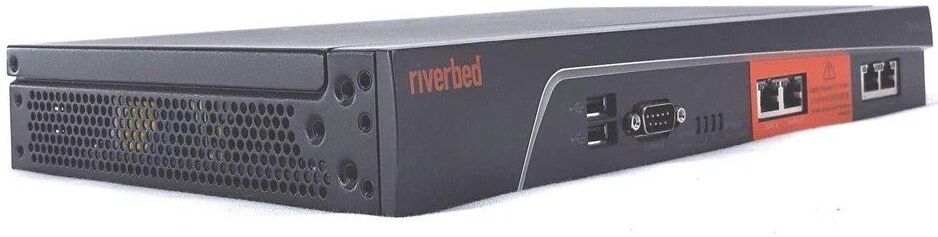
Riverbed Steelhead 250 Series Firewall SHA-00250-M, NewStep into enterprise network optimisation with the Riverbed Steelhead 250 Series (SHA-00250-M), a compact WAN acceleration appliance designed to improve application performance and reduce bandwidth usage across distributed networks. Built for branch offices and small-to-medium environments, it enhances data transfer speeds and user experience over WAN connections. ✔️ WAN Optimisation Technology – Accelerates applications and data transfer across wide-area networks for faster performance ✔️ Bandwidth Reduction (Up to 60–95%) – Minimises network traffic using data deduplication and compression ✔️ Application Acceleration – Improves performance for file sharing, email, web apps, and databases ✔️ 24/7 Enterprise Operation – Designed for continuous use in business environments ✔️ Compact Desktop Form Factor – Space-saving design suitable for branch offices and IT racks ✔️ Optimised TCP/UDP Handling – Enhances network efficiency and reduces latency ✔️ Integrated Bypass Ports – Maintains network availability even during power loss or failure ✔️ Low Power Consumption (~40W) – Efficient operation for always-on deployments ✔️ Supports Multiple Users & Sites – Scales for multi-branch connectivity and enterprise setups ✔️ Easy Deployment – Works without major changes to existing infrastructure or applications The Riverbed Steelhead 250 Series is designed for businesses that need faster application performance over WAN without upgrading bandwidth . Whether you're running remote offices, centralising servers, or improving cloud access, this appliance delivers proven optimisation and efficiency. Ideal for enterprise IT environments, it keeps your network fast, efficient, and cost-effective .63,99 £*Shipping: 0,00 £Secure redirect to the provider
-
DrayTek Vigor 2962 Dual-WAN 2.5Gb Ethernet Firewall VPN RouterEnterprise-grade router with dual WAN ports supporting 200 concurrent VPN tunnels and 300,000 NAT sessions. Supports multiple routing protocols (BGP, OSPF, RIP) and VoIP standards (SIP, H.323) with integrated 4-port Gigabit/2.5 Gigabit switch. Desktop or rack-mountable form factor with comprehensive remote management capabilities via HTTP, HTTPS, SSH, SNMP, and TR-069.546,99 £*Shipping: 0,00 £Secure redirect to the provider



-
What are main clause-subordinate clause constructions?
Main clause-subordinate clause constructions are sentences that consist of a main clause and one or more subordinate clauses. The main clause is a complete sentence that can stand alone, while the subordinate clause depends on the main clause for its meaning and cannot stand alone. Subordinate clauses often begin with subordinating conjunctions such as "because," "although," "if," or "when," and they provide additional information or context to the main clause. These constructions allow for more complex and nuanced sentence structures, and they are commonly used in both spoken and written language. **
-
Can an adverbial clause also be a subject clause or an object clause?
No, an adverbial clause cannot be a subject clause or an object clause. An adverbial clause functions as an adverb to modify a verb, adjective, or adverb in a sentence. Subject clauses and object clauses, on the other hand, serve as the subject or object of the main clause, respectively. Each type of clause has a specific grammatical function within a sentence. **
-
Is the main clause and subordinate clause correct?
To determine if the main clause and subordinate clause are correct, you need to ensure that they are grammatically sound and that they make sense when combined. The main clause should be able to stand alone as a complete sentence, while the subordinate clause provides additional information but cannot stand alone. Checking for subject-verb agreement and proper punctuation between the two clauses can help confirm their correctness. **
-
How do I recognize a relative clause, a conjunctional clause, and an interrogative clause?
A relative clause typically starts with a relative pronoun (such as who, whom, whose, which, or that) and provides more information about a noun in the main clause. A conjunctional clause, on the other hand, is introduced by a conjunction (such as and, but, or because) and connects two independent clauses. An interrogative clause is a type of clause that asks a question and is typically introduced by an interrogative pronoun (such as who, what, when, where, why, or how) or an interrogative adverb (such as how, when, or where). **


How can I recognize a relative clause, a conjunctional clause, and an interrogative clause?
A relative clause is a type of dependent clause that typically starts with a relative pronoun (such as who, whom, whose, which, or that) and provides additional information about a noun in the main clause. A conjunctional clause, on the other hand, is a dependent clause that functions as an adverb, adjective, or noun in a sentence and is connected to the main clause by a conjunction (such as because, although, if, when, etc.). An interrogative clause is a type of clause that asks a question and typically begins with a question word (such as who, what, where, when, why, or how) or with a helping verb followed by the subject. **
Is the accompanying clause in direct speech a main clause or a subordinate clause?
The accompanying clause in direct speech can be either a main clause or a subordinate clause, depending on its role in the sentence. If the clause is expressing a complete thought and can stand alone as a sentence, then it is a main clause. However, if the clause is dependent on the rest of the sentence for its meaning and cannot stand alone, then it is a subordinate clause. It's important to consider the context and structure of the sentence to determine the role of the accompanying clause in direct speech. **
Top-Angebote
Products related to Clause:
-
Combo Retail Shop Christmas Fence Ornaments, Santa Clause Peeker, Yard Ornaments, Indoor Outdoor, DIY Festival Gift redBring the magic of the holidays to your home with these charming Christmas Fence Ornaments. Featuring a playful Santa Clause Peeker, these yard decorations are perfect for both indoor and outdoor spaces. Crafted to brighten your garden, lawn, or...44,97 $*Shipping: 0,00 $Secure redirect to the provider
-
ModernMart Christmas Fence Decoration: Santa, Snowman, Reindeer, Penguin Peeker Ornaments For Indoor Outdoor Festivities Color: Santa ClauseChristmas Fence Decoration Santa Clause Snowman Reindeer Penguin Peeker Yard Ornaments Indoor Outdoor Festival Gift Christmas Fence Decoration Santa Clause Snowman Reindeer Penguin Peeker Brand new & high quality Material: PP plastic Color:...20,00 $*Shipping: 0,00 $Secure redirect to the provider
-
Daily Deals Depot Santa Clause Peeker Yard Ornament, Christmas Fence Decoration, Indoor Outdoor Holiday Placard, DIY Festival Gift redBring the festive spirit to life with this Christmas Fence Ornament Santa Clause Peeker Yard Decoration, the perfect way to surprise neighbors and delight guests this holiday season. Designed for indoor and outdoor use, this charming Santa Clause...21,97 $*Shipping: 0,00 $Secure redirect to the provider
-
DrayTek Vigor 2927 Wired Dual-WAN VPN Firewall RouterEnterprise-class desktop router with integrated 6-port Gigabit Ethernet switch and dual WAN ports. Supports up to 50 concurrent VPN tunnels and 25 SSL VPN tunnels with 60,000 NAT sessions capacity. Advanced routing protocols include BGP, static IPv4/IPv6, and policy-based routing with comprehensive remote management options.283,49 £*Shipping: 0,00 £Secure redirect to the provider
-
How do you transform an object clause or a subject clause into a dependent clause (subordinate clause)?
To transform an object clause or a subject clause into a dependent clause, you can add a subordinating conjunction at the beginning of the clause. For example, changing "I know that he is coming" (object clause) to "I know when he is coming" (dependent clause). Another way is to remove the subject or object pronoun and change the verb form to make it dependent on the main clause. For instance, changing "She believes she can win" (subject clause) to "She believes she can win" (dependent clause). **
-
Is an infinitive clause a subordinate clause?
Yes, an infinitive clause is a type of subordinate clause. It functions as a single unit within a sentence and is dependent on the main clause for its meaning. Infinitive clauses typically begin with the word "to" followed by a verb, and they can serve various purposes such as expressing purpose, result, or obligation. **
-
What are main clause-subordinate clause constructions?
Main clause-subordinate clause constructions are sentences that consist of a main clause and one or more subordinate clauses. The main clause is a complete sentence that can stand alone, while the subordinate clause depends on the main clause for its meaning and cannot stand alone. Subordinate clauses often begin with subordinating conjunctions such as "because," "although," "if," or "when," and they provide additional information or context to the main clause. These constructions allow for more complex and nuanced sentence structures, and they are commonly used in both spoken and written language. **
-
Can an adverbial clause also be a subject clause or an object clause?
No, an adverbial clause cannot be a subject clause or an object clause. An adverbial clause functions as an adverb to modify a verb, adjective, or adverb in a sentence. Subject clauses and object clauses, on the other hand, serve as the subject or object of the main clause, respectively. Each type of clause has a specific grammatical function within a sentence. **
Similar search terms for Clause
-
Riverbed Steelhead 250 Series Firewall SHA-00250-M, NewStep into enterprise network optimisation with the Riverbed Steelhead 250 Series (SHA-00250-M), a compact WAN acceleration appliance designed to improve application performance and reduce bandwidth usage across distributed networks. Built for branch offices and small-to-medium environments, it enhances data transfer speeds and user experience over WAN connections. ✔️ WAN Optimisation Technology – Accelerates applications and data transfer across wide-area networks for faster performance ✔️ Bandwidth Reduction (Up to 60–95%) – Minimises network traffic using data deduplication and compression ✔️ Application Acceleration – Improves performance for file sharing, email, web apps, and databases ✔️ 24/7 Enterprise Operation – Designed for continuous use in business environments ✔️ Compact Desktop Form Factor – Space-saving design suitable for branch offices and IT racks ✔️ Optimised TCP/UDP Handling – Enhances network efficiency and reduces latency ✔️ Integrated Bypass Ports – Maintains network availability even during power loss or failure ✔️ Low Power Consumption (~40W) – Efficient operation for always-on deployments ✔️ Supports Multiple Users & Sites – Scales for multi-branch connectivity and enterprise setups ✔️ Easy Deployment – Works without major changes to existing infrastructure or applications The Riverbed Steelhead 250 Series is designed for businesses that need faster application performance over WAN without upgrading bandwidth . Whether you're running remote offices, centralising servers, or improving cloud access, this appliance delivers proven optimisation and efficiency. Ideal for enterprise IT environments, it keeps your network fast, efficient, and cost-effective .63,99 £*Shipping: 0,00 £Secure redirect to the provider
-
DrayTek Vigor 2962 Dual-WAN 2.5Gb Ethernet Firewall VPN RouterEnterprise-grade router with dual WAN ports supporting 200 concurrent VPN tunnels and 300,000 NAT sessions. Supports multiple routing protocols (BGP, OSPF, RIP) and VoIP standards (SIP, H.323) with integrated 4-port Gigabit/2.5 Gigabit switch. Desktop or rack-mountable form factor with comprehensive remote management capabilities via HTTP, HTTPS, SSH, SNMP, and TR-069.546,99 £*Shipping: 0,00 £Secure redirect to the provider
-
DrayTek Vigor 2927ax Dual-WAN Wi-Fi 6 VPN Firewall RouterEnterprise-grade Wi-Fi 6 router with dual gigabit WAN ports and integrated 6-port switch supporting up to 60,000 NAT sessions. Handles 50 concurrent VPN tunnels and 25 SSL VPN connections with support for advanced routing protocols including BGP and policy-based routing. Desktop form factor with 2-year warranty.361,99 £*Shipping: 0,00 £Secure redirect to the provider
-
StarTech.com 14-inch 16:9 Laptop Privacy Screen, Reversible Gold Filter w/Enhanced Privacy, Computer Security Filter, Removable Screen Protector/ShielPrevent visual eavesdropping by limiting the viewing angle of your laptop screenThis Laptop Privacy Screen features a universal design compatible with 14-inch laptop screens with a 16:9 aspect ratio display. Gold Privacy Filters have a reflective surface that instantly transitions from a clear view to a mirror effect outside of the intended viewing angle, significantly improving visual privacy when working in an office or public environment.Prevent Visual EavesdroppingThe gold security filter is a convenient solution that features a quick shift to a mirror-like effect to protect confidential data from unwanted viewers while maintaining a clear view of 60 degrees (+/- 30 degrees from the center) for the user.Reversible FilterThe privacy filter's removable and reversible design allows users to effortlessly switch between a glossy gold side for maximum privacy and an anti-glare matte side for environments prone to glare. The matte side provides additional screen protection with a scratch- and fingerprint-resistant coating.Hassle-free InstallationThe universal design won't interfere with top-mounted webcams, sensors, or when closing the lid. The privacy filter can be installed in two different ways. Affix the privacy shield to bezel-less displays using the transparent and residue-free adhesive strips. Alternatively, use the slide mount tabs to install the privacy screen on displays with bezels. The latter is recommended when frequent reversal or removal is required.Blue Light ReductionReduce eye strain and improve visual comfort with this blue light-reducing privacy shield. It blocks 40% - 51% of the blue light emitted from the display in the 380nm - 480nm wavelength range. Digital eye strain can lead to symptoms like headaches, dry eyes, and blurred vision.The StarTech.com Advantage48,99 £*Shipping: 0,00 £Secure redirect to the provider
-
Is the main clause and subordinate clause correct?
To determine if the main clause and subordinate clause are correct, you need to ensure that they are grammatically sound and that they make sense when combined. The main clause should be able to stand alone as a complete sentence, while the subordinate clause provides additional information but cannot stand alone. Checking for subject-verb agreement and proper punctuation between the two clauses can help confirm their correctness. **
-
How do I recognize a relative clause, a conjunctional clause, and an interrogative clause?
A relative clause typically starts with a relative pronoun (such as who, whom, whose, which, or that) and provides more information about a noun in the main clause. A conjunctional clause, on the other hand, is introduced by a conjunction (such as and, but, or because) and connects two independent clauses. An interrogative clause is a type of clause that asks a question and is typically introduced by an interrogative pronoun (such as who, what, when, where, why, or how) or an interrogative adverb (such as how, when, or where). **
-
How can I recognize a relative clause, a conjunctional clause, and an interrogative clause?
A relative clause is a type of dependent clause that typically starts with a relative pronoun (such as who, whom, whose, which, or that) and provides additional information about a noun in the main clause. A conjunctional clause, on the other hand, is a dependent clause that functions as an adverb, adjective, or noun in a sentence and is connected to the main clause by a conjunction (such as because, although, if, when, etc.). An interrogative clause is a type of clause that asks a question and typically begins with a question word (such as who, what, where, when, why, or how) or with a helping verb followed by the subject. **
-
Is the accompanying clause in direct speech a main clause or a subordinate clause?
The accompanying clause in direct speech can be either a main clause or a subordinate clause, depending on its role in the sentence. If the clause is expressing a complete thought and can stand alone as a sentence, then it is a main clause. However, if the clause is dependent on the rest of the sentence for its meaning and cannot stand alone, then it is a subordinate clause. It's important to consider the context and structure of the sentence to determine the role of the accompanying clause in direct speech. **
* All prices are inclusive of VAT and, if applicable, plus shipping costs. The offer information is based on the details provided by the respective shop and is updated through automated processes. Real-time updates do not occur, so deviations can occur in individual cases. ** Note: Parts of this content were created by AI.