Buy unblocksource.eu ?
We are moving the project
unblocksource.eu .
Are you interested in purchasing the domain
unblocksource.eu ?
domain@kv-gmbh.de · 0541-91531010
Buy unblocksource.eu ?
What is a pollen filter 2?
A pollen filter, also known as a cabin air filter, is a component of a vehicle's ventilation system that helps to remove pollen, dust, and other airborne particles from the air entering the cabin. It is designed to improve the air quality inside the vehicle and provide a more comfortable and healthy environment for the occupants. The filter is typically located behind the glove compartment or under the dashboard and should be replaced regularly to maintain its effectiveness. **
How do I find the pollen filter in my car?
To find the pollen filter in your car, you typically need to consult your car's owner's manual to locate its exact position. In most vehicles, the pollen filter is located behind the glove compartment or under the dashboard on the passenger side. You may need to remove the glove compartment or a panel to access the filter. Once you locate the filter, you can easily replace it by following the instructions in your owner's manual. **
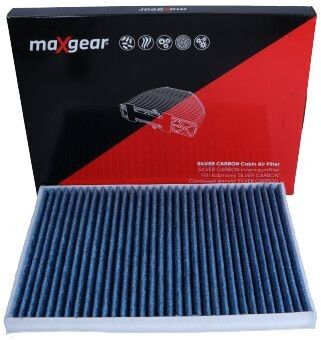

Similar search terms for MAXGEAR-26-1830-Pollen-filter
Top-Angebote
Products related to MAXGEAR-26-1830-Pollen-filter:
-
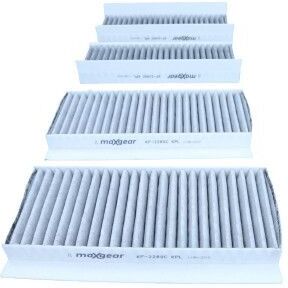
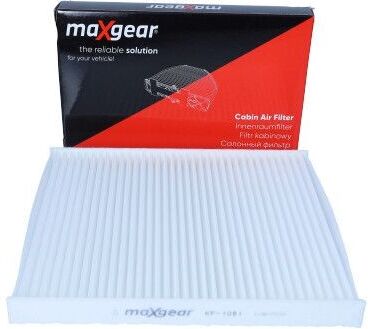
MAXGEAR 26-1997 Pollen filterFilter type: Pollen Filter; Length [mm]: 216; Width [mm]: 200; Height: 20; for OE number: 27891-00Q0B; Manufacturer Restriction: Behr; Vehicle Equipment: for vehicles with air conditioning (manually controlled); Production number from: E054801; TecDoc Engine Number: 31425, 3376116,49 £*Shipping: 8,45 £Secure redirect to the provider


-
Cold or pollen?
It is difficult to determine whether symptoms are caused by a cold or pollen without a proper diagnosis. Both can cause similar symptoms such as sneezing, congestion, and a runny nose. However, colds are caused by viruses and can be contagious, while pollen allergies are triggered by the immune system's response to pollen particles. It is best to consult a healthcare professional for an accurate diagnosis and appropriate treatment. **
-
Who financed the industrialization in Germany in 1830?
The industrialization in Germany in 1830 was primarily financed by a combination of private investors, wealthy merchants, and entrepreneurs. These individuals provided the capital needed to establish factories, develop infrastructure, and invest in new technologies. Additionally, some industrial projects received financial support from the government through subsidies, loans, and tax incentives to promote economic growth and modernization. Overall, the industrialization in Germany during this period was driven by a mix of private and public funding sources. **
-
How many kilometers do you cover in 1830 minutes?
In 1830 minutes, you would cover a distance of 1830 minutes * (x kilometers/minute), where x is your speed in kilometers per minute. If you know your speed, you can calculate the distance covered. For example, if you are traveling at a speed of 60 kilometers per hour, then you would cover 1830 minutes * (60 kilometers/60 minutes) = 1830 kilometers. **
-
Do grasses produce pollen?
Yes, grasses do produce pollen. Grasses are flowering plants and their reproductive structures include male parts called stamens, which produce pollen. This pollen is released into the air and is carried by the wind to fertilize the female parts of the grass, leading to the production of seeds. This process is part of the grasses' reproductive cycle and is essential for their survival and propagation. **

What is Novalis' pollen?
Novalis' pollen refers to the concept of the German Romantic poet and philosopher Novalis (Friedrich von Hardenberg) as a symbol of the transformative and life-giving power of nature. In his writings, Novalis used the image of pollen to represent the vital force that connects all living beings and sustains the cycle of life. This concept reflects his deep reverence for nature and its role in the spiritual and creative life of humanity. **
Which states became colonial powers only after 1830 and why?
Some states that became colonial powers only after 1830 include Germany, Italy, and Japan. These countries were relatively late in establishing colonies due to factors such as late unification (in the case of Germany and Italy) and a focus on internal development. Additionally, the Industrial Revolution played a role in driving these countries to seek overseas territories for resources, markets, and strategic advantages. Japan, in particular, embarked on a colonial expansion in the late 19th and early 20th centuries as part of its modernization efforts. **
Top-Angebote
Products related to MAXGEAR-26-1830-Pollen-filter:
-
MAXGEAR 26-1830 Pollen filterFilter type: Activated Carbon Filter, with antibacterial action, with anti-allergic effect; Length [mm]: 248; Width [mm]: 171; Height: 23; Left-/right-hand drive vehicles: for left-hand drive vehicles; Vehicle Equipment: for vehicles with air conditioning15,49 £*Shipping: 8,45 £Secure redirect to the provider
-
What is a pollen filter 2?
A pollen filter, also known as a cabin air filter, is a component of a vehicle's ventilation system that helps to remove pollen, dust, and other airborne particles from the air entering the cabin. It is designed to improve the air quality inside the vehicle and provide a more comfortable and healthy environment for the occupants. The filter is typically located behind the glove compartment or under the dashboard and should be replaced regularly to maintain its effectiveness. **
-
How do I find the pollen filter in my car?
To find the pollen filter in your car, you typically need to consult your car's owner's manual to locate its exact position. In most vehicles, the pollen filter is located behind the glove compartment or under the dashboard on the passenger side. You may need to remove the glove compartment or a panel to access the filter. Once you locate the filter, you can easily replace it by following the instructions in your owner's manual. **
-
Cold or pollen?
It is difficult to determine whether symptoms are caused by a cold or pollen without a proper diagnosis. Both can cause similar symptoms such as sneezing, congestion, and a runny nose. However, colds are caused by viruses and can be contagious, while pollen allergies are triggered by the immune system's response to pollen particles. It is best to consult a healthcare professional for an accurate diagnosis and appropriate treatment. **
-
Who financed the industrialization in Germany in 1830?
The industrialization in Germany in 1830 was primarily financed by a combination of private investors, wealthy merchants, and entrepreneurs. These individuals provided the capital needed to establish factories, develop infrastructure, and invest in new technologies. Additionally, some industrial projects received financial support from the government through subsidies, loans, and tax incentives to promote economic growth and modernization. Overall, the industrialization in Germany during this period was driven by a mix of private and public funding sources. **
Similar search terms for MAXGEAR-26-1830-Pollen-filter
-
MAXGEAR 26-1997 Pollen filterFilter type: Pollen Filter; Length [mm]: 216; Width [mm]: 200; Height: 20; for OE number: 27891-00Q0B; Manufacturer Restriction: Behr; Vehicle Equipment: for vehicles with air conditioning (manually controlled); Production number from: E054801; TecDoc Engine Number: 31425, 3376116,49 £*Shipping: 8,45 £Secure redirect to the provider
-
MAXGEAR 26-2577 Pollen filterFilter type: Activated Carbon Filter with polyphenol, with antibacterial action, Particulate filter (PM 2.5), with fungicidal effect, Activated Carbon Filter; Fitting Position: Eng.compart. middle, below plenum chamber cover; Length [mm]: 360; Width [mm]: 174; Height: 3013,49 £*Shipping: 8,45 £Secure redirect to the provider
-
MAXGEAR 26-2578 Pollen filterFilter type: Particulate Filter; Length [mm]: 175; Width [mm]: 290; Height: 30; Quantity: 1; Highly efficient version with active carbon (art. no.): 0986628578; Version with active carbon (art. no.): 1987435591; Construction Year to: 12/2024, 12/2020; Construction Year from: 08/201814,49 £*Shipping: 8,45 £Secure redirect to the provider
-
How many kilometers do you cover in 1830 minutes?
In 1830 minutes, you would cover a distance of 1830 minutes * (x kilometers/minute), where x is your speed in kilometers per minute. If you know your speed, you can calculate the distance covered. For example, if you are traveling at a speed of 60 kilometers per hour, then you would cover 1830 minutes * (60 kilometers/60 minutes) = 1830 kilometers. **
-
Do grasses produce pollen?
Yes, grasses do produce pollen. Grasses are flowering plants and their reproductive structures include male parts called stamens, which produce pollen. This pollen is released into the air and is carried by the wind to fertilize the female parts of the grass, leading to the production of seeds. This process is part of the grasses' reproductive cycle and is essential for their survival and propagation. **
-
What is Novalis' pollen?
Novalis' pollen refers to the concept of the German Romantic poet and philosopher Novalis (Friedrich von Hardenberg) as a symbol of the transformative and life-giving power of nature. In his writings, Novalis used the image of pollen to represent the vital force that connects all living beings and sustains the cycle of life. This concept reflects his deep reverence for nature and its role in the spiritual and creative life of humanity. **
-
Which states became colonial powers only after 1830 and why?
Some states that became colonial powers only after 1830 include Germany, Italy, and Japan. These countries were relatively late in establishing colonies due to factors such as late unification (in the case of Germany and Italy) and a focus on internal development. Additionally, the Industrial Revolution played a role in driving these countries to seek overseas territories for resources, markets, and strategic advantages. Japan, in particular, embarked on a colonial expansion in the late 19th and early 20th centuries as part of its modernization efforts. **
* All prices are inclusive of VAT and, if applicable, plus shipping costs. The offer information is based on the details provided by the respective shop and is updated through automated processes. Real-time updates do not occur, so deviations can occur in individual cases. ** Note: Parts of this content were created by AI.